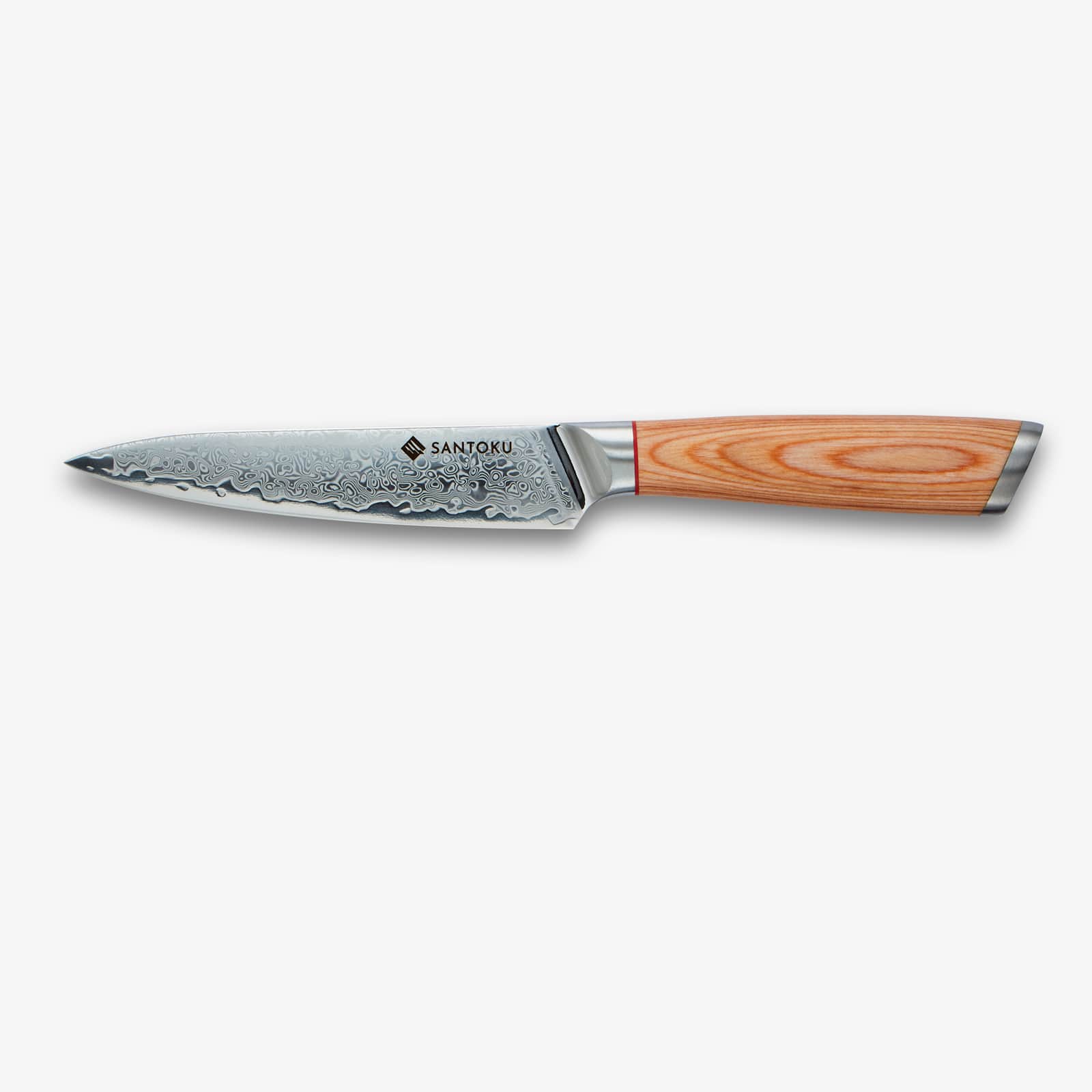
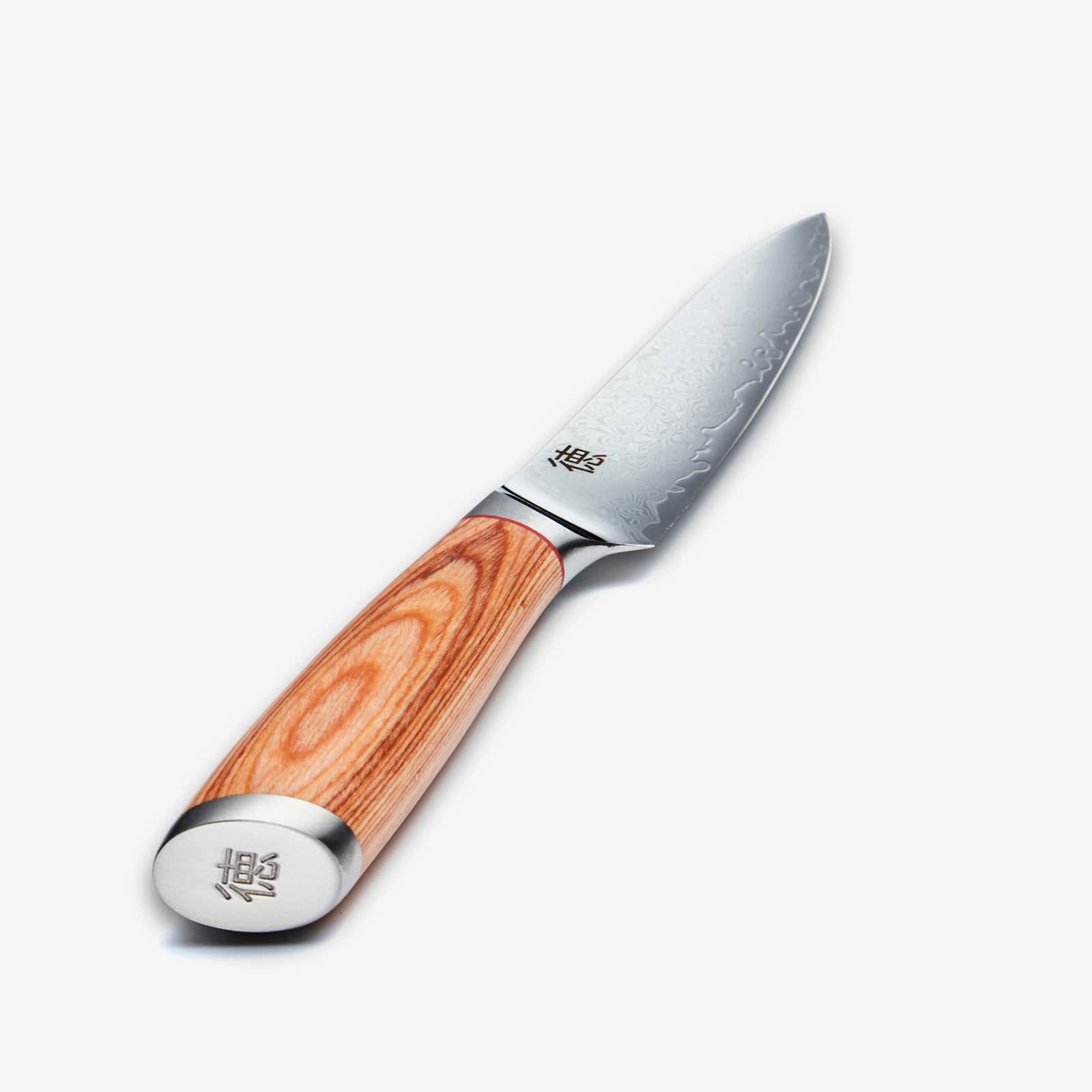
Nakiri / Chukabocho Full Tang Steel Cleaver
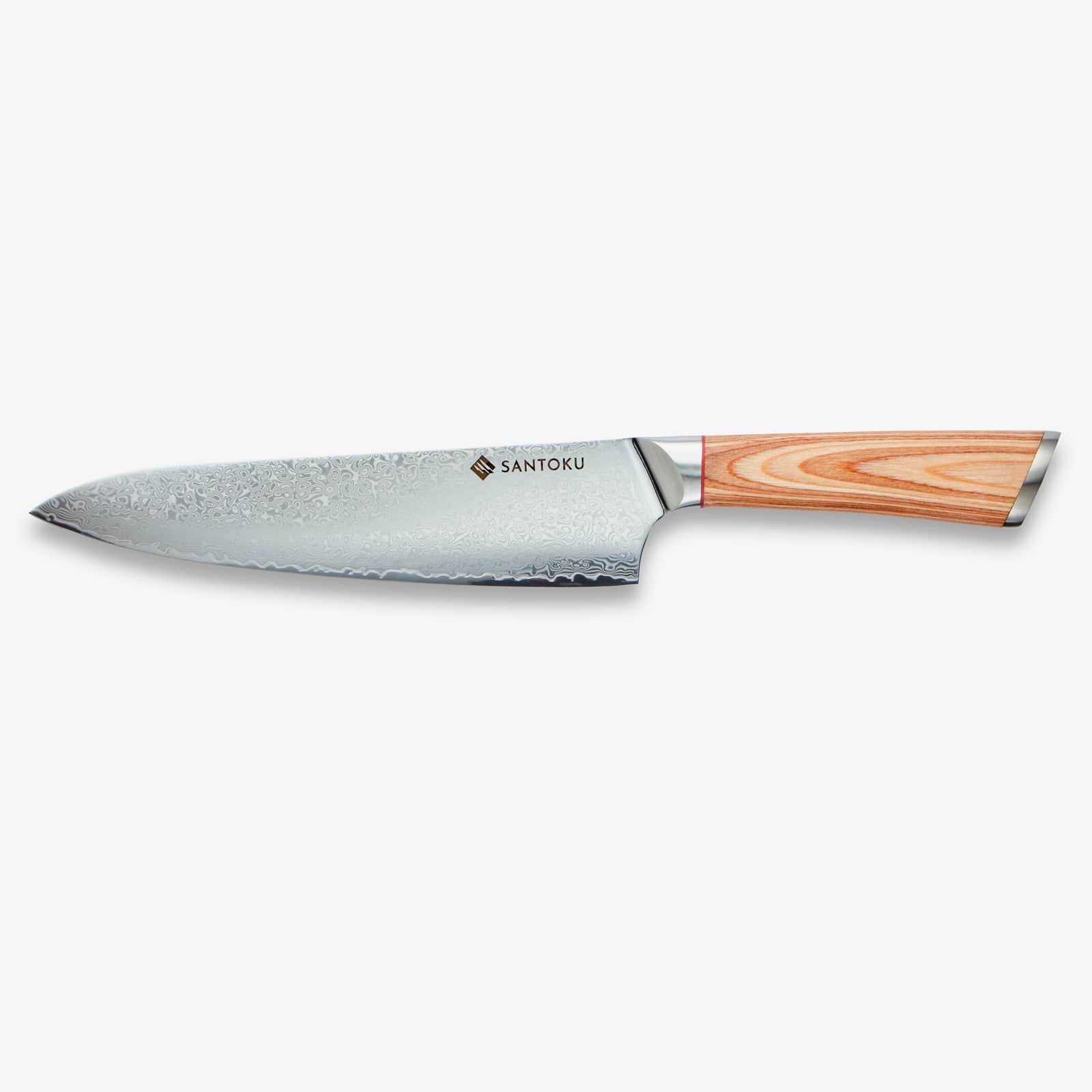
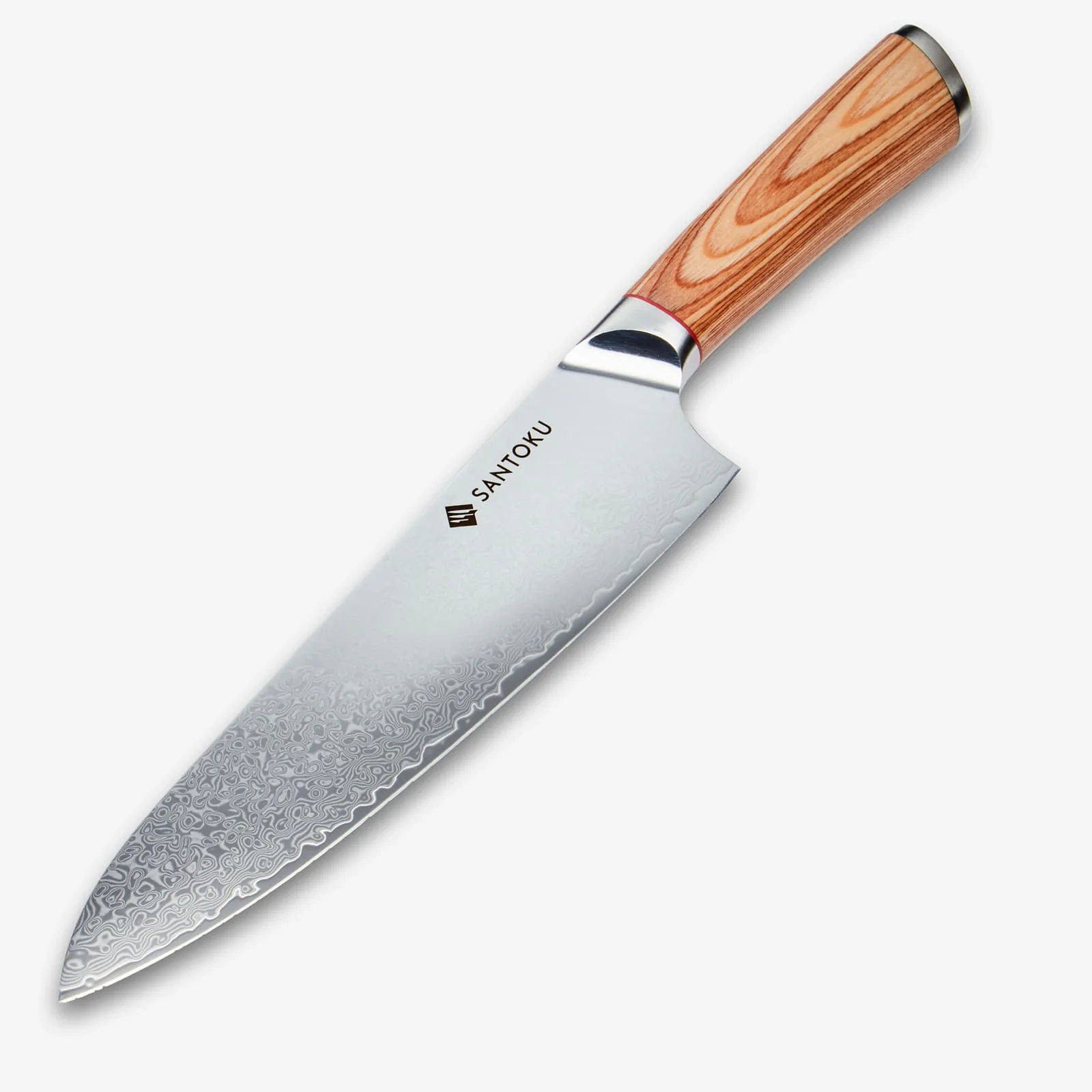
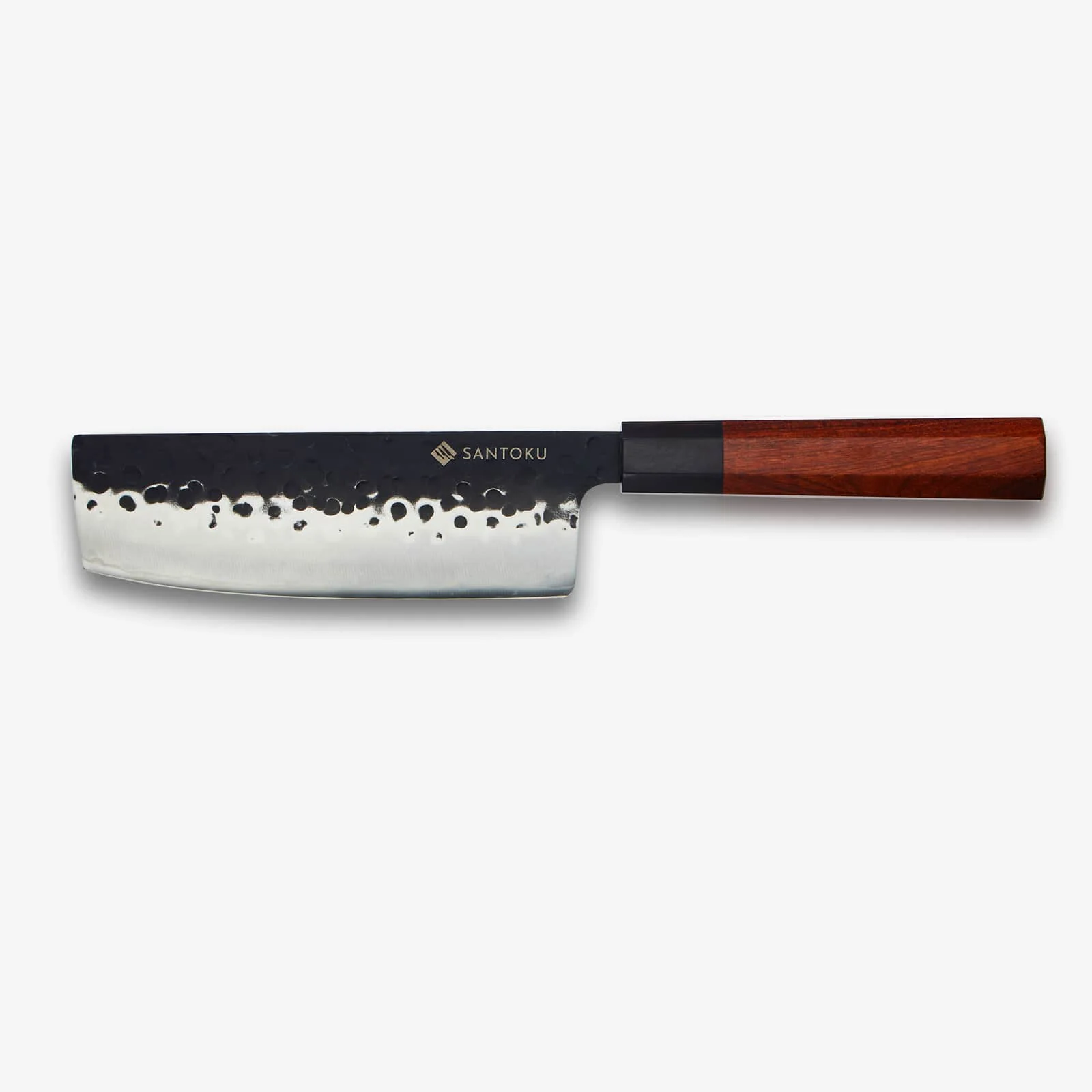
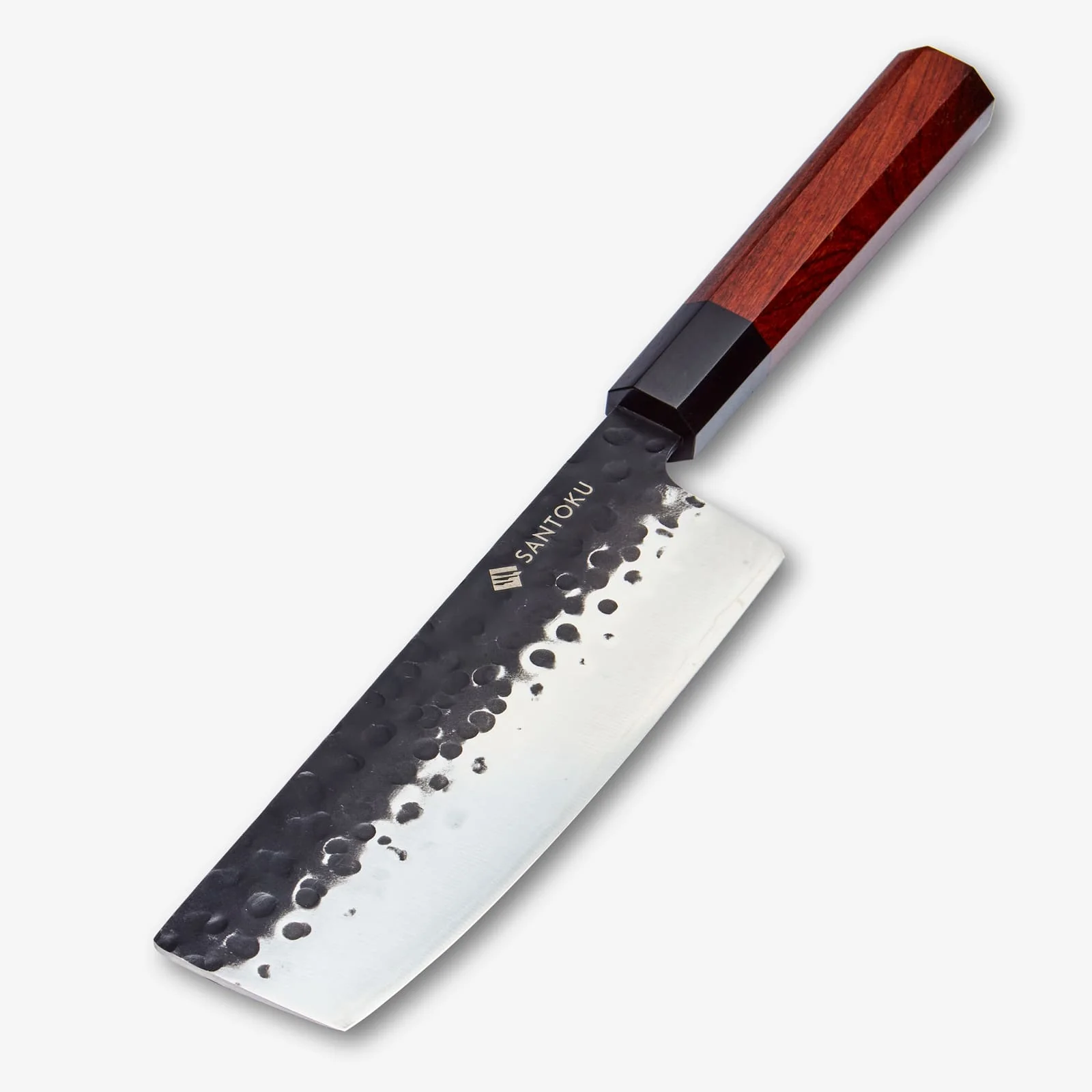
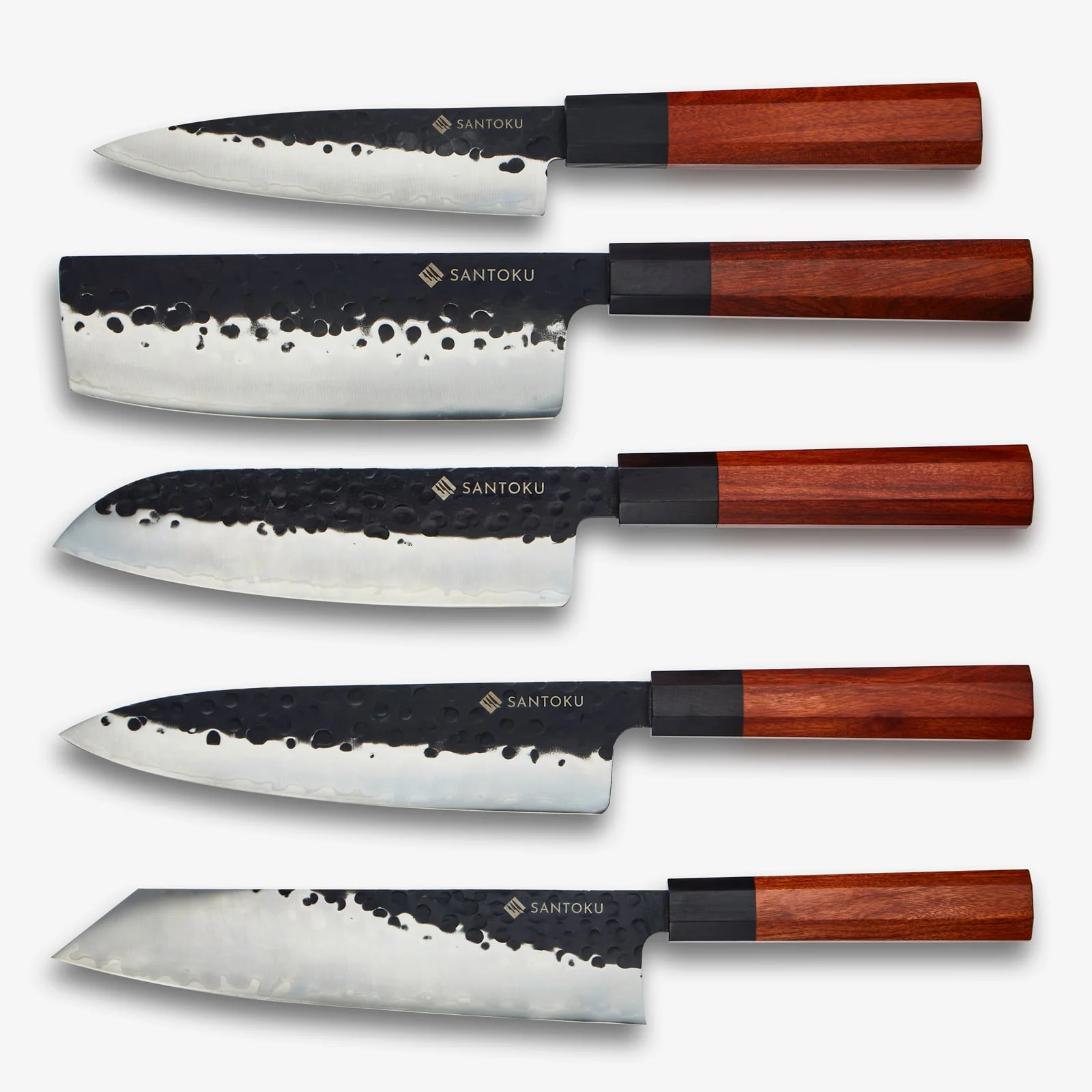
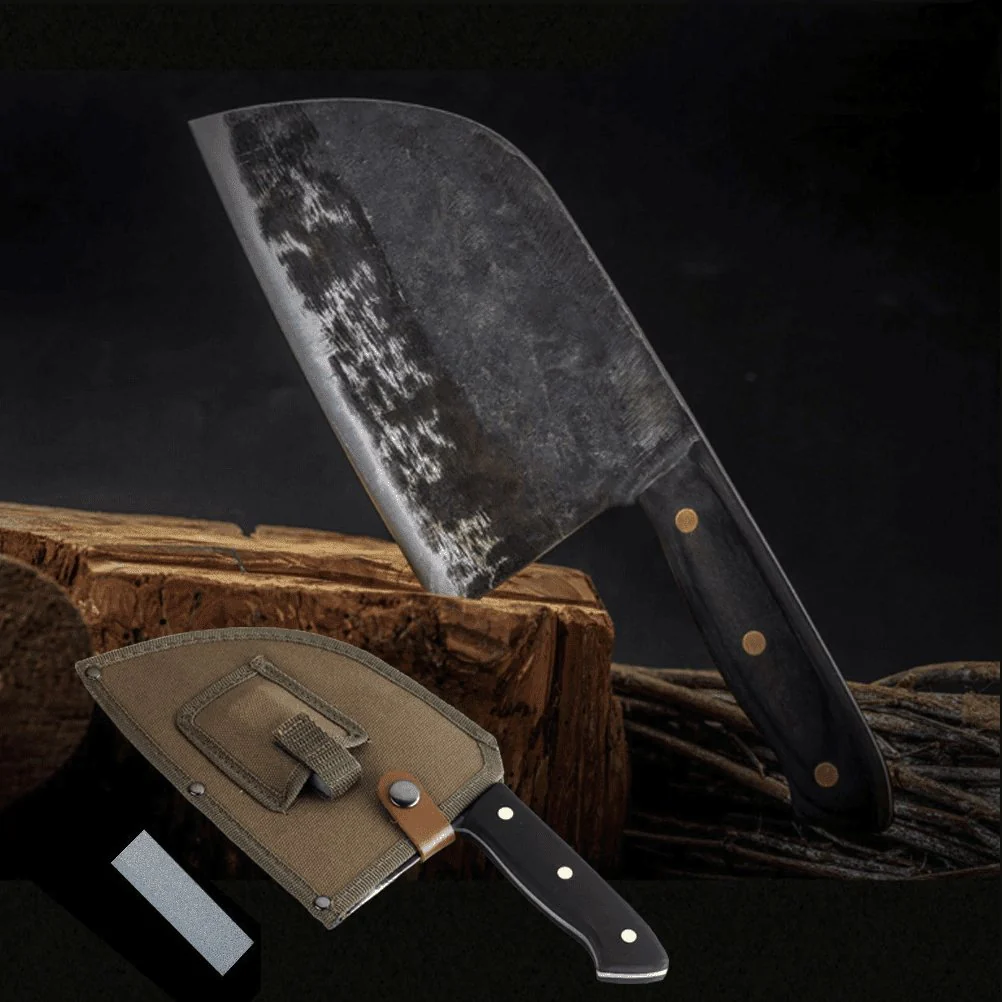
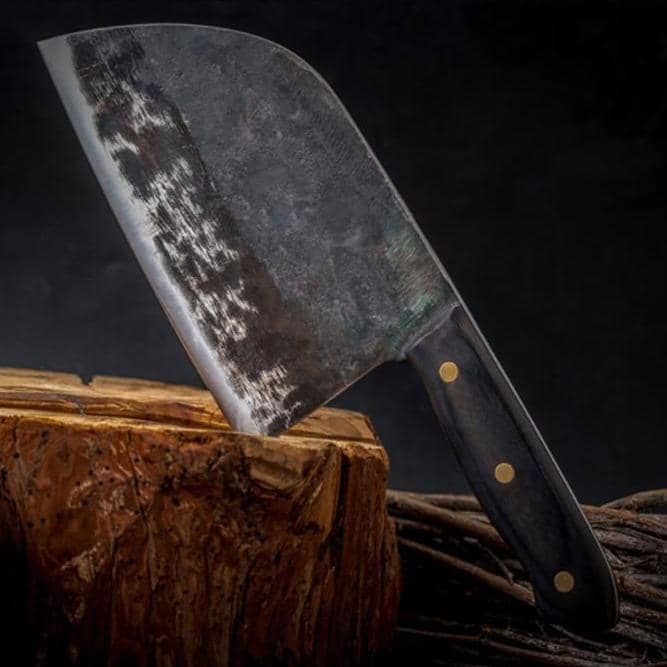
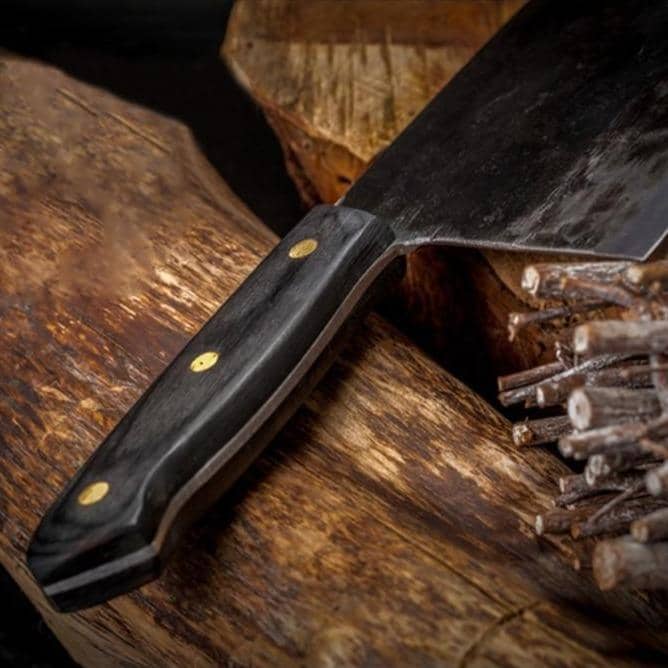
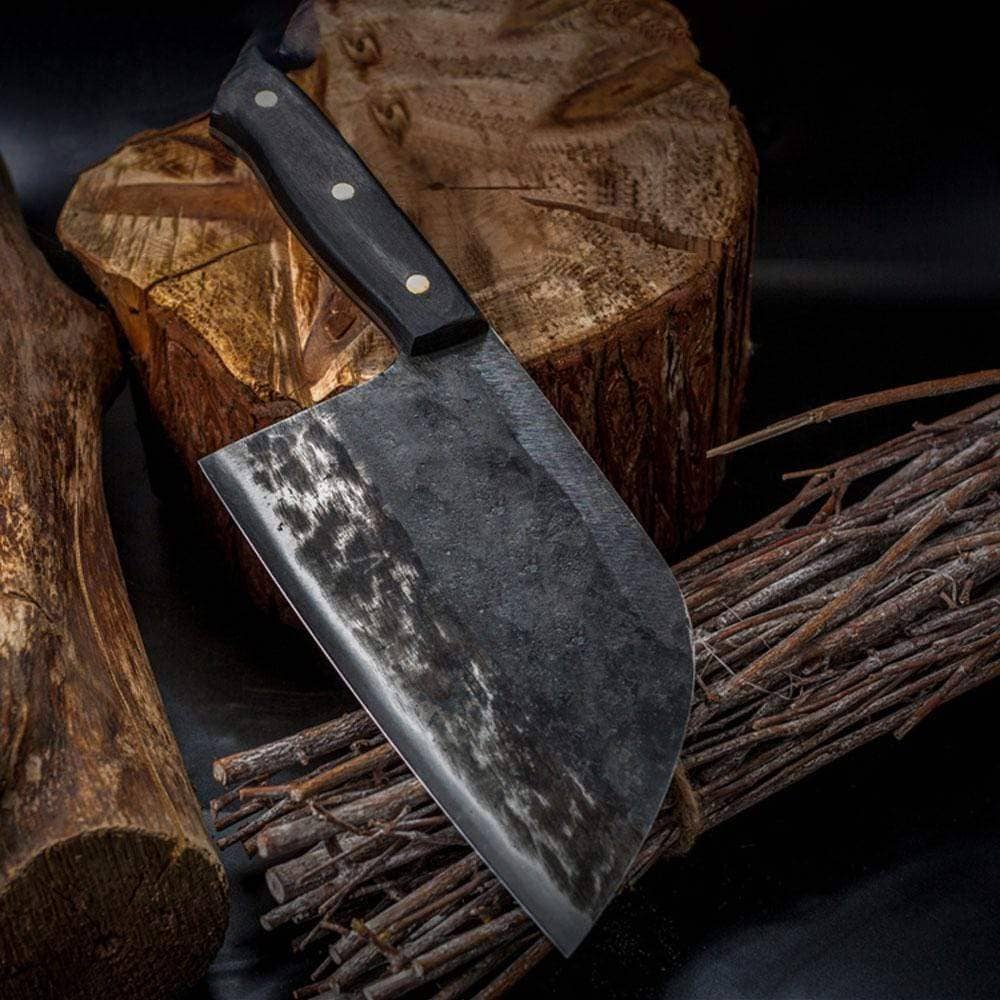
The Nakiri / Chukabocho is a hand-forged Japanese-style vegetable cleaver with an 18 cm straight, double-bevelled high-carbon steel blade — built for clean, full-contact push cuts through vegetables. At 435 g with a 10 cm tall blade and a 4 mm spine, it sits between a lightweight nakiri and a heavier Chinese-style chukabocho: enough height to keep your knuckles clear and enough mass to power through hard-skinned produce. It ships with a safety sheath and is priced at £69.99.
At a glance
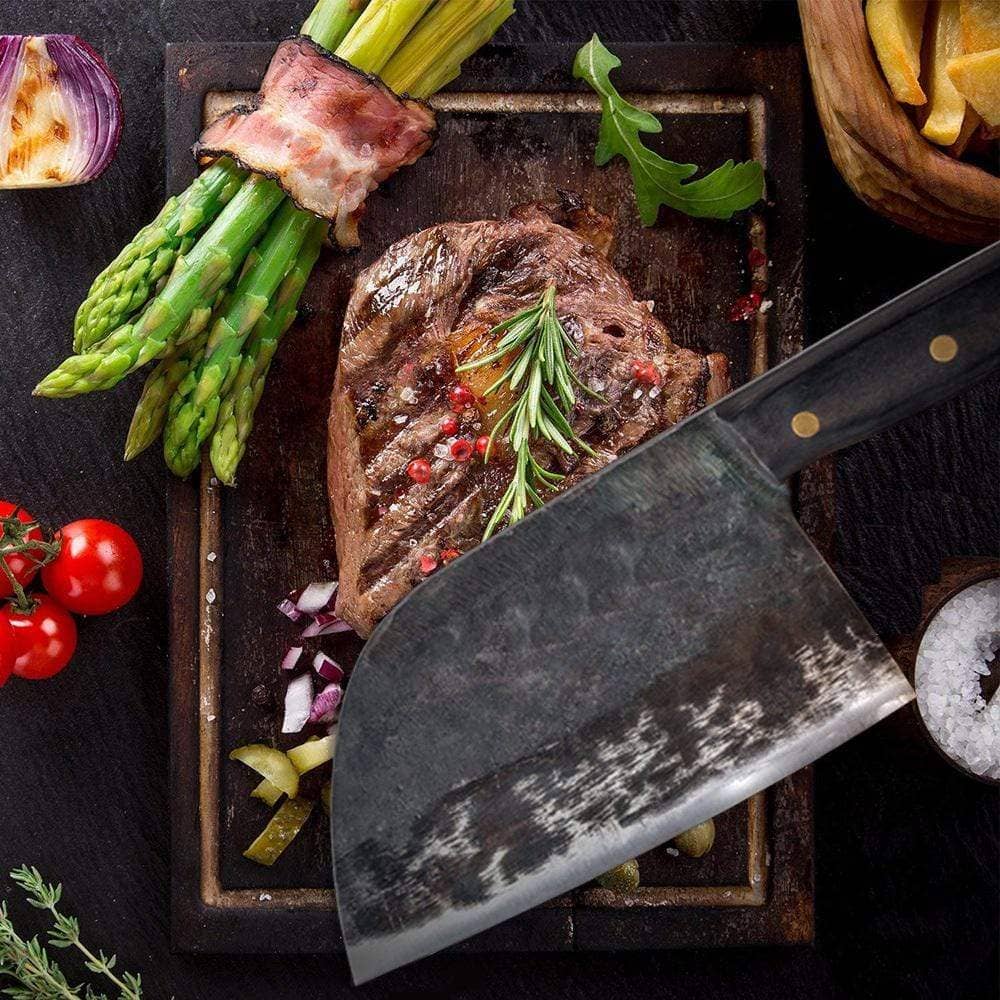
- Best for: julienne, brunoise and allumette cuts; hard-skinned produce (squash, swede); precise vegetable prep
- Blade: straight, double-edged (double-bevel) high-carbon steel
- Not for: bones or frozen food — the thin, hard edge is built for clean produce cuts, not impact
- In the box: knife + safety sheath
Specifications
| Overall length | 33 cm |
|---|---|
| Blade length | 18 cm |
| Blade height (widest point) | 10 cm |
| Spine thickness | 4 mm |
| Net weight | 435 g |
| Blade material | High-carbon steel |
| Edge | Double-bevel, straight |
| Expected service life | 15–20 years with proper care |
Why the straight edge matters
Unlike a curved chef's knife, a nakiri-style blade meets the board along its whole length in a single downward push — no rocking, no sawing. That delivers cleaner, more uniform slices and faster vegetable prep (Nakiri bōchō, Wikipedia). The 10 cm blade height gives generous knuckle clearance and doubles as a bench scraper for moving prepped veg.
Forged for edge retention
Each blade is hand-forged and heat-treated: quenched at 780 °C, then tempered at 180–200 °C. High-carbon steels of this class are typically hardened to roughly 58–62 HRC, the range that balances long edge retention with easy resharpening (ChefPanko, HRC & Steel Types). The result is a knife that takes a very fine edge and, with care, lasts 15–20 years.
Care
- Hand-wash only; dry thoroughly to prevent the high-carbon steel from staining or rusting
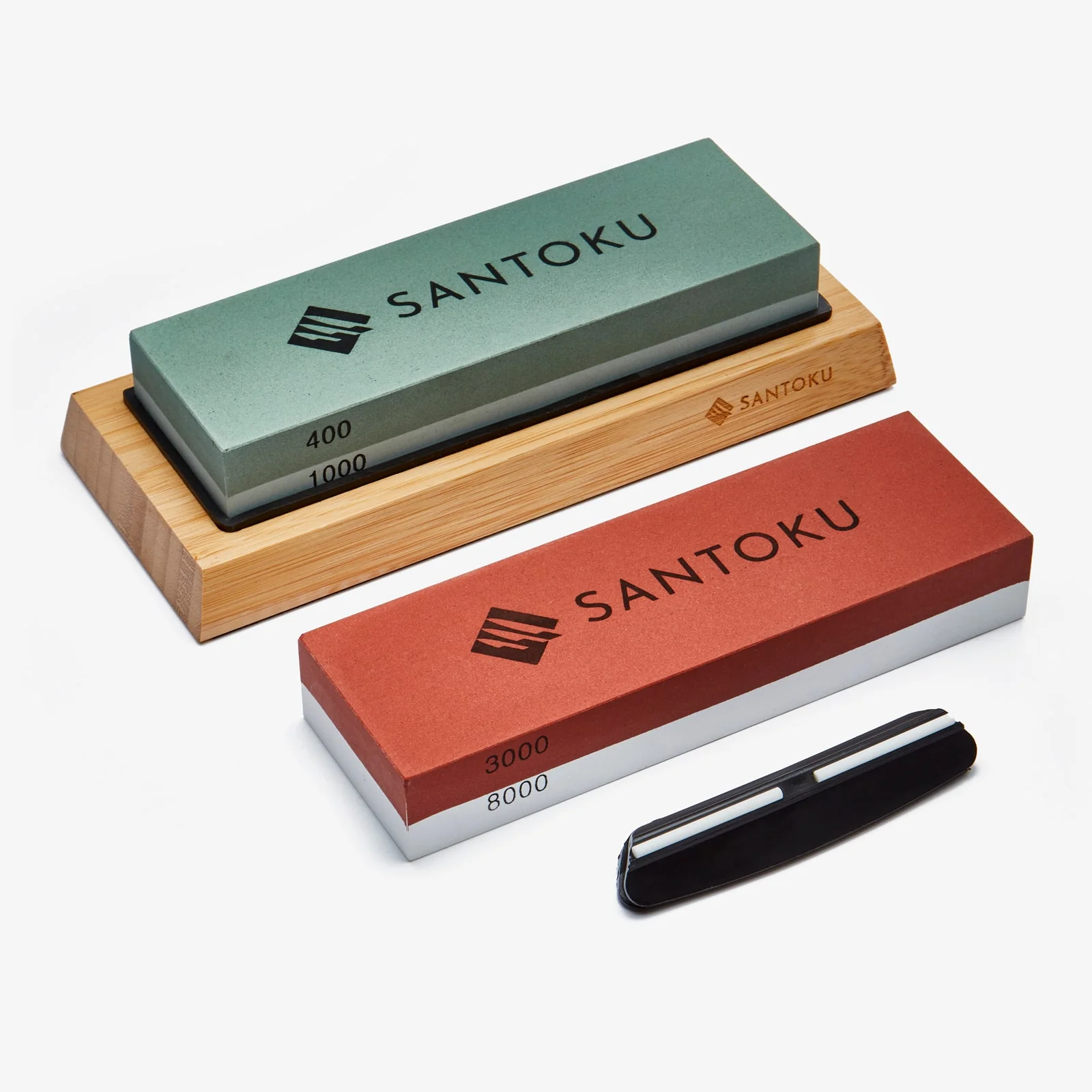
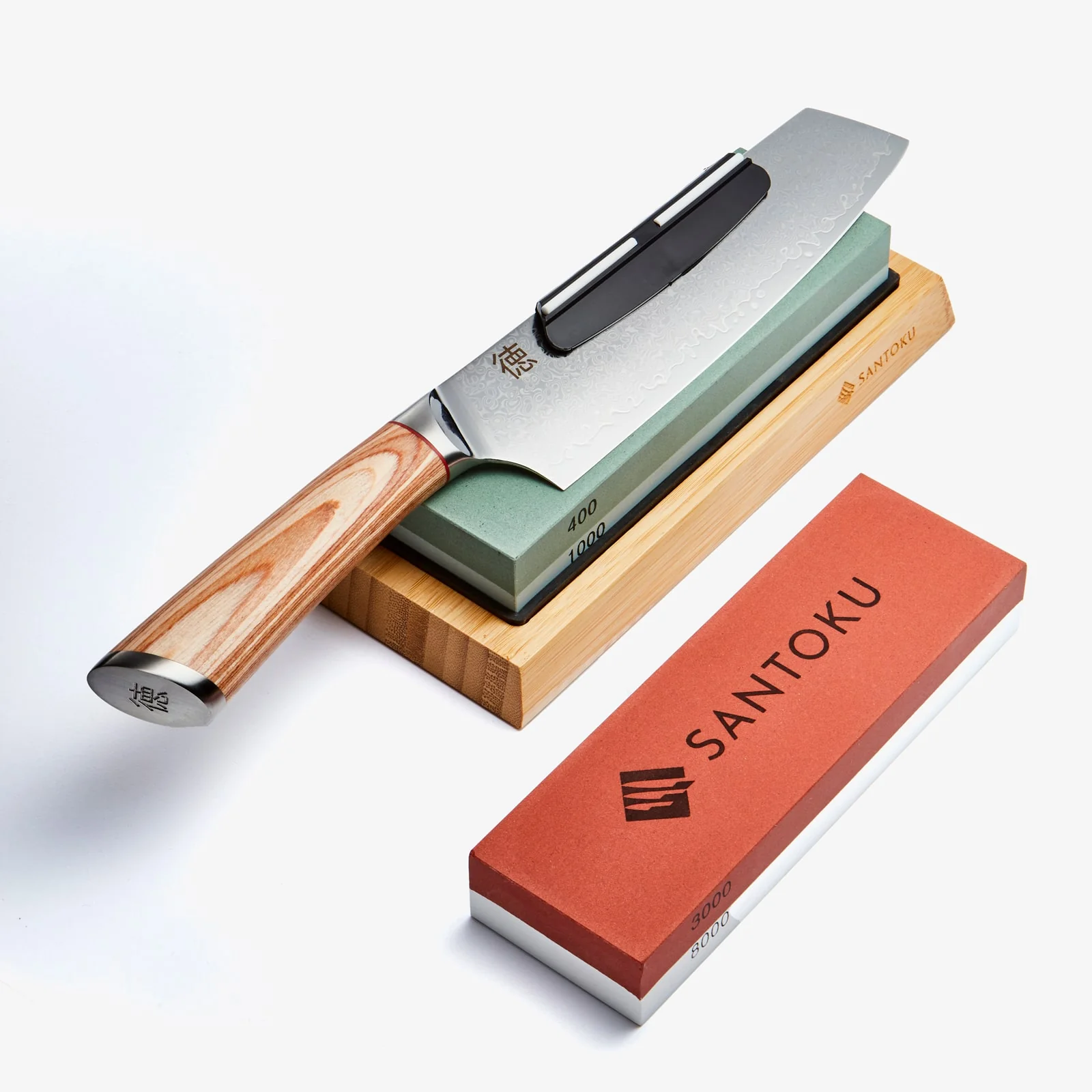
- Hone regularly; resharpen on a whetstone as needed
- Do not cut bones or frozen food
FAQ
What is a nakiri knife used for?
A nakiri is a Japanese vegetable knife. Its straight, double-bevelled edge makes clean push-cuts through vegetables — ideal for julienne, brunoise and thin, uniform slices — without the rocking motion a curved chef's knife needs.
What's the difference between a nakiri and a chukabocho?
A traditional nakiri is light (around 150–200 g) and compact; a chukabocho is a taller, heavier Chinese-style cleaver. This blade is a hybrid — 435 g with a 10 cm tall face — giving more heft and knuckle clearance than a standard nakiri while keeping the straight vegetable-cutting edge.
Can a nakiri cut meat or bones?
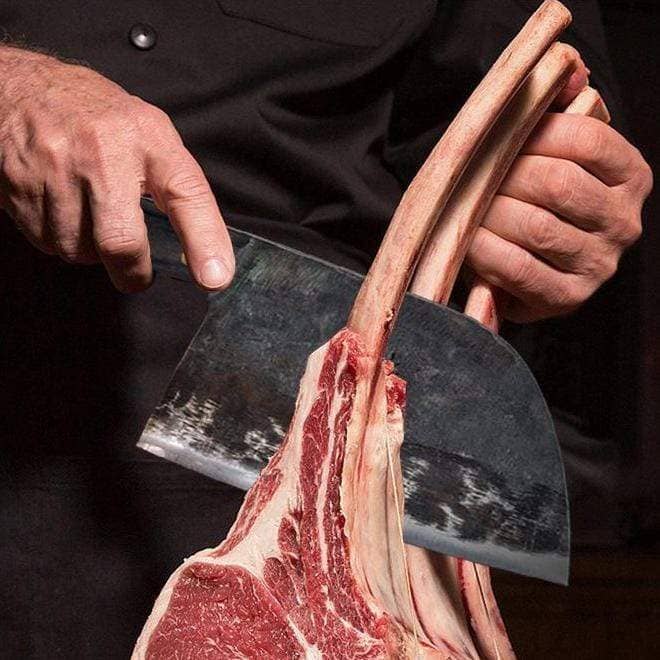
It handles boneless meat, but it is not a butcher's tool. Do not use it on bones or frozen food — the thin, hard high-carbon edge is designed for clean produce cuts and can chip on impact.
How do I care for a high-carbon steel knife?
Hand-wash and dry it immediately after use. High-carbon steel rusts and stains more readily than stainless, so never leave it wet or in a dishwasher.
Product Information
Product Information
Shipping & Returns
Shipping & Returns
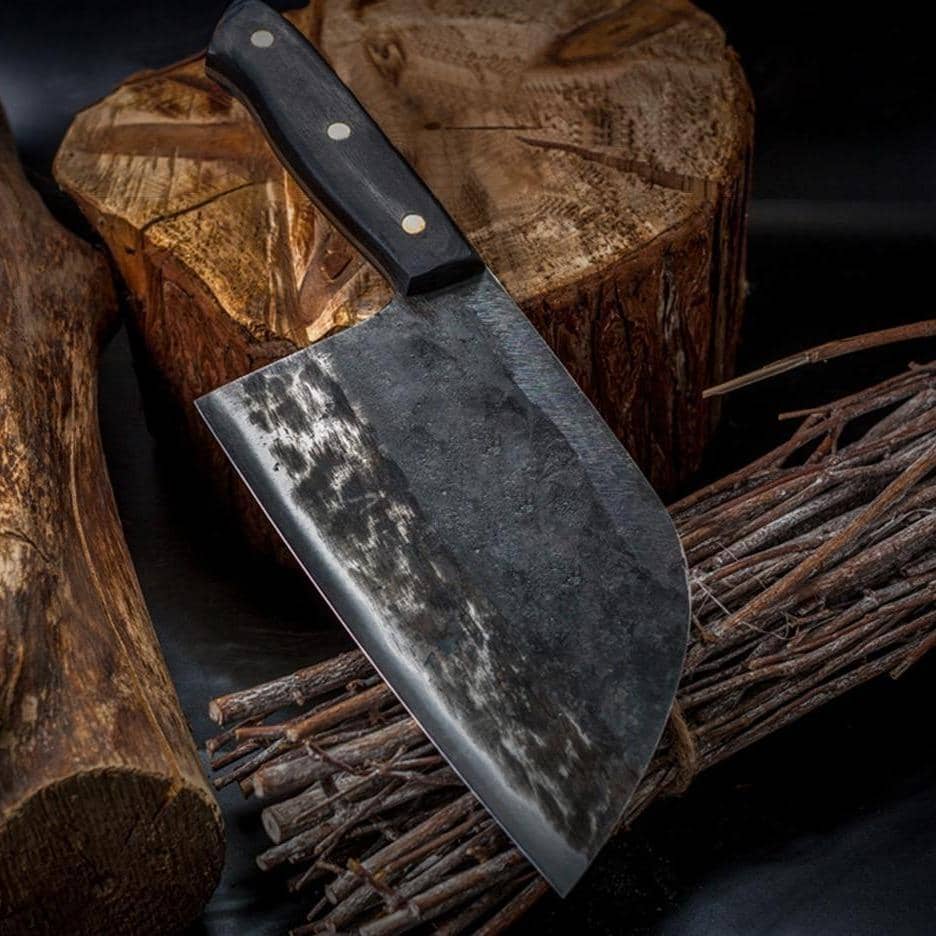
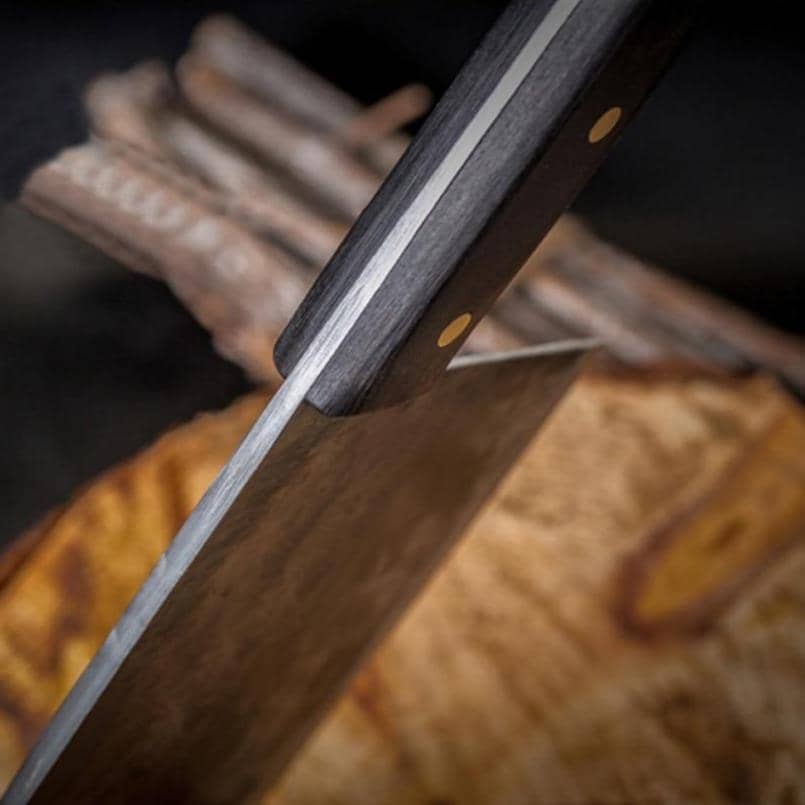
Nakiri / Chukabocho Full Tang Steel Cleaver
Nakiri / Chukabocho Full Tang Steel Cleaver
The Nakiri / Chukabocho is a hand-forged Japanese-style vegetable cleaver with an 18 cm straight, double-bevelled high-carbon steel blade — built for clean, full-contact push cuts through vegetables. At 435 g with a 10 cm tall blade and a 4 mm spine, it sits between a lightweight nakiri and a heavier Chinese-style chukabocho: enough height to keep your knuckles clear and enough mass to power through hard-skinned produce. It ships with a safety sheath and is priced at £69.99.
At a glance
- Best for: julienne, brunoise and allumette cuts; hard-skinned produce (squash, swede); precise vegetable prep
- Blade: straight, double-edged (double-bevel) high-carbon steel
- Not for: bones or frozen food — the thin, hard edge is built for clean produce cuts, not impact
- In the box: knife + safety sheath
Specifications
| Overall length | 33 cm |
|---|---|
| Blade length | 18 cm |
| Blade height (widest point) | 10 cm |
| Spine thickness | 4 mm |
| Net weight | 435 g |
| Blade material | High-carbon steel |
| Edge | Double-bevel, straight |
| Expected service life | 15–20 years with proper care |
Why the straight edge matters
Unlike a curved chef's knife, a nakiri-style blade meets the board along its whole length in a single downward push — no rocking, no sawing. That delivers cleaner, more uniform slices and faster vegetable prep (Nakiri bōchō, Wikipedia). The 10 cm blade height gives generous knuckle clearance and doubles as a bench scraper for moving prepped veg.
Forged for edge retention
Each blade is hand-forged and heat-treated: quenched at 780 °C, then tempered at 180–200 °C. High-carbon steels of this class are typically hardened to roughly 58–62 HRC, the range that balances long edge retention with easy resharpening (ChefPanko, HRC & Steel Types). The result is a knife that takes a very fine edge and, with care, lasts 15–20 years.
Care
- Hand-wash only; dry thoroughly to prevent the high-carbon steel from staining or rusting
- Hone regularly; resharpen on a whetstone as needed
- Do not cut bones or frozen food
FAQ
What is a nakiri knife used for?
A nakiri is a Japanese vegetable knife. Its straight, double-bevelled edge makes clean push-cuts through vegetables — ideal for julienne, brunoise and thin, uniform slices — without the rocking motion a curved chef's knife needs.
What's the difference between a nakiri and a chukabocho?
A traditional nakiri is light (around 150–200 g) and compact; a chukabocho is a taller, heavier Chinese-style cleaver. This blade is a hybrid — 435 g with a 10 cm tall face — giving more heft and knuckle clearance than a standard nakiri while keeping the straight vegetable-cutting edge.
Can a nakiri cut meat or bones?
It handles boneless meat, but it is not a butcher's tool. Do not use it on bones or frozen food — the thin, hard high-carbon edge is designed for clean produce cuts and can chip on impact.
How do I care for a high-carbon steel knife?
Hand-wash and dry it immediately after use. High-carbon steel rusts and stains more readily than stainless, so never leave it wet or in a dishwasher.
Original: $69.99
-65%$69.99
$24.50Product Information
Product Information
Shipping & Returns
Shipping & Returns
Description
The Nakiri / Chukabocho is a hand-forged Japanese-style vegetable cleaver with an 18 cm straight, double-bevelled high-carbon steel blade — built for clean, full-contact push cuts through vegetables. At 435 g with a 10 cm tall blade and a 4 mm spine, it sits between a lightweight nakiri and a heavier Chinese-style chukabocho: enough height to keep your knuckles clear and enough mass to power through hard-skinned produce. It ships with a safety sheath and is priced at £69.99.
At a glance
- Best for: julienne, brunoise and allumette cuts; hard-skinned produce (squash, swede); precise vegetable prep
- Blade: straight, double-edged (double-bevel) high-carbon steel
- Not for: bones or frozen food — the thin, hard edge is built for clean produce cuts, not impact
- In the box: knife + safety sheath
Specifications
| Overall length | 33 cm |
|---|---|
| Blade length | 18 cm |
| Blade height (widest point) | 10 cm |
| Spine thickness | 4 mm |
| Net weight | 435 g |
| Blade material | High-carbon steel |
| Edge | Double-bevel, straight |
| Expected service life | 15–20 years with proper care |
Why the straight edge matters
Unlike a curved chef's knife, a nakiri-style blade meets the board along its whole length in a single downward push — no rocking, no sawing. That delivers cleaner, more uniform slices and faster vegetable prep (Nakiri bōchō, Wikipedia). The 10 cm blade height gives generous knuckle clearance and doubles as a bench scraper for moving prepped veg.
Forged for edge retention
Each blade is hand-forged and heat-treated: quenched at 780 °C, then tempered at 180–200 °C. High-carbon steels of this class are typically hardened to roughly 58–62 HRC, the range that balances long edge retention with easy resharpening (ChefPanko, HRC & Steel Types). The result is a knife that takes a very fine edge and, with care, lasts 15–20 years.
Care
- Hand-wash only; dry thoroughly to prevent the high-carbon steel from staining or rusting
- Hone regularly; resharpen on a whetstone as needed
- Do not cut bones or frozen food
FAQ
What is a nakiri knife used for?
A nakiri is a Japanese vegetable knife. Its straight, double-bevelled edge makes clean push-cuts through vegetables — ideal for julienne, brunoise and thin, uniform slices — without the rocking motion a curved chef's knife needs.
What's the difference between a nakiri and a chukabocho?
A traditional nakiri is light (around 150–200 g) and compact; a chukabocho is a taller, heavier Chinese-style cleaver. This blade is a hybrid — 435 g with a 10 cm tall face — giving more heft and knuckle clearance than a standard nakiri while keeping the straight vegetable-cutting edge.
Can a nakiri cut meat or bones?
It handles boneless meat, but it is not a butcher's tool. Do not use it on bones or frozen food — the thin, hard high-carbon edge is designed for clean produce cuts and can chip on impact.
How do I care for a high-carbon steel knife?
Hand-wash and dry it immediately after use. High-carbon steel rusts and stains more readily than stainless, so never leave it wet or in a dishwasher.